Charting playful places since 2021 — written on the Gold Coast, Australia
Jester's Atlas.

The full itinerary — five field reports

Every report follows the same journey: how we arrived, what we found, where the path grew steep, and whether we would return. Bearings are our rating — the closer to a full 360°, the closer the game is to a perfect loop.

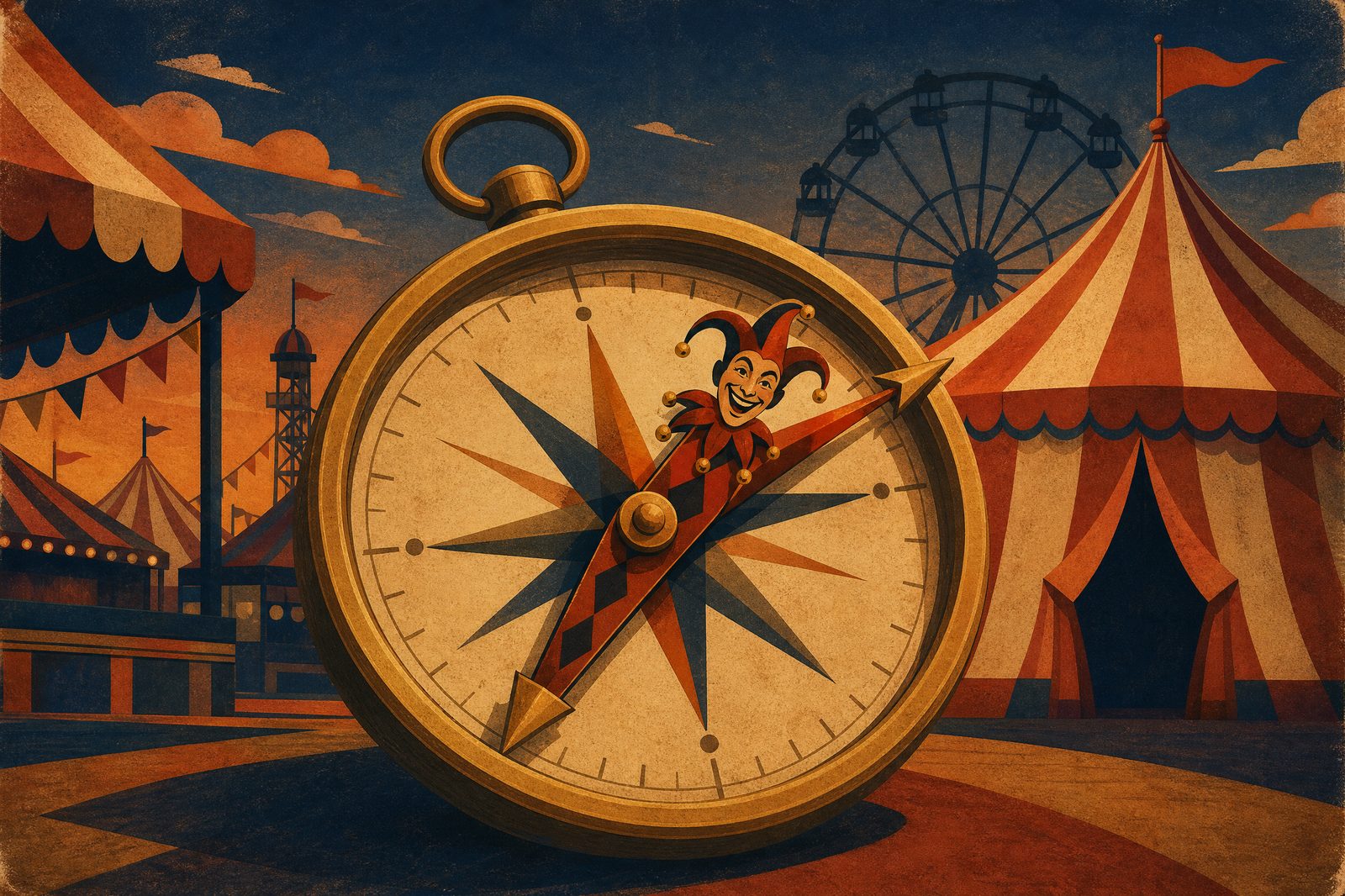
Carnival Compass: a brass compass with a jester needle in front of fairground tents

Leg One — Carnival Compass

Genre: Exploration puzzle Journey length: 9–12 hours Bearing: 350° of 360°

We arrived at Carnival Compass expecting a novelty and left having filled half a notebook. The premise is disarmingly simple: you hold a compass whose needle is a tiny grinning jester, and it points toward whatever the fairground wants you to find next. Sometimes that is a locked ticket booth. Sometimes it is a carousel horse missing its shadow. The game never explains itself twice, and it never needs to.

What elevates the journey is the way each of the seven fairground maps folds into the next. Solutions you learn on the pier return, inverted, in the hall of mirrors. By the final chapter the compass itself becomes part of the puzzles — you will tilt it, trade it, and at one memorable moment deliberately lie to it. The carousel finale is a small masterpiece of misdirection that we refuse to spoil here.

Complaints from the trail are few. Two mid-game riddles rely on colour distinctions that travellers with colour-blindness may find unfair, though an accessibility toggle in the settings mostly mends this. And we wished the lovely hurdy-gurdy soundtrack had one or two more tunes in its case.
Would we return? Without hesitation. Carnival Compass is the rare puzzle game that treats the player as a fellow traveller rather than a tourist. Pack it first.
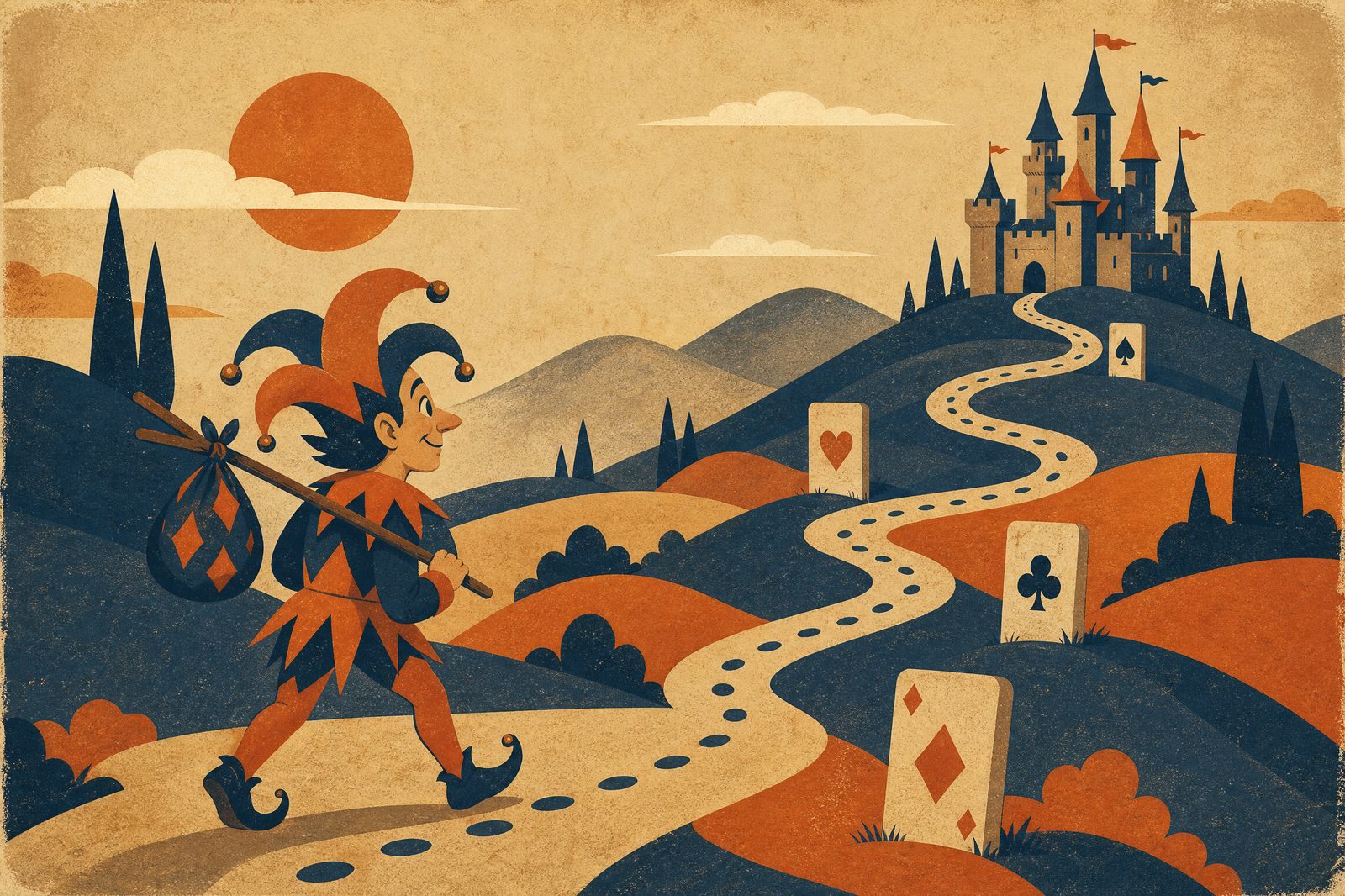
Jester's Journey: a jester with a knapsack walking toward a distant castle

Leg Two — Jester's Journey

Genre: Walking adventure Journey length: 6–8 hours Bearing: 320° of 360°

Jester's Journey is the slowest game on this itinerary and the one we think about most often at breakfast. You play a court jester who has resigned — politely, with a written note — and set off to see the kingdom he has only ever joked about. The whole game is played with one thumb: hold to walk, release to rest, tap to chat with whoever shares the road.

The writing is the compass here. Every milestone is a playing card driven into the earth, and each one carries a two-line story that lands somewhere between a proverb and a punchline. We stopped at all eighty-one. The gentle progression system — jokes traded for directions, directions traded for shortcuts — never becomes a chore because the game never punishes a wrong turn; it simply shows you something different.

If we are honest in our logbook, the middle act sags. The marshland chapter recycles its scenery, and one companion character (the pessimistic mule) overstays his welcome by a village or two. But then the final ascent to the castle begins, the lute swells, and all is forgiven.

Would we return? Yes — in autumn, ideally, with tea. A walking game that actually understands walking.
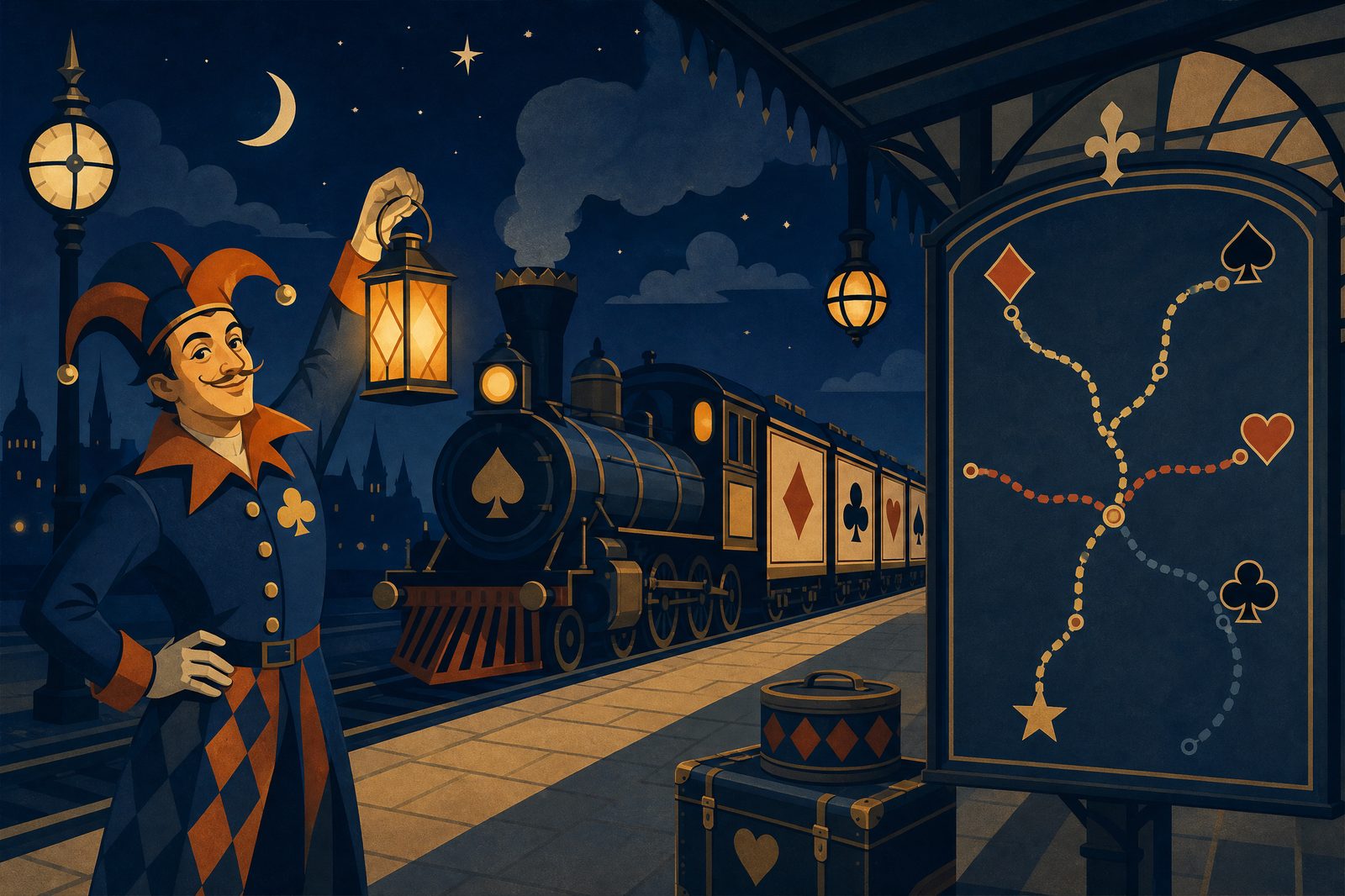
Wildcard Waypoints: a conductor jester with a lantern beside a night train

Leg Three — Wildcard Waypoints

Genre: Route builder Journey length: 12–15 hours Bearing: 335° of 360°

Every crew has a member who loves timetables, and Wildcard Waypoints was written for them. The premise: a night railway whose stations are named after card suits, and a conductor jester who judges your junctions with a raised eyebrow you can feel through the screen. Your job is to lay track so that every passenger — each a walking pun on a playing card — reaches the right platform before the moon sets.

The puzzle design is immaculate for the first thirty levels and merely very good afterwards. Signals, sidings and switchbacks are introduced at a saunter, then combined with real wit. The wildcard mechanic — one joker carriage per network that may bend exactly one rule — produces the kind of “surely not… it worked!” moments that make strangers on trams ask what you are grinning at.

Our one paragraph of grievance: the star-rating thresholds on late levels demand a perfection that edges from satisfying into fussy, and the otherwise gorgeous night palette can make distant signals hard to read on a small screen. Neither derailed us.

Would we return? We never left. Someone in this office is still optimising junction forty-two.
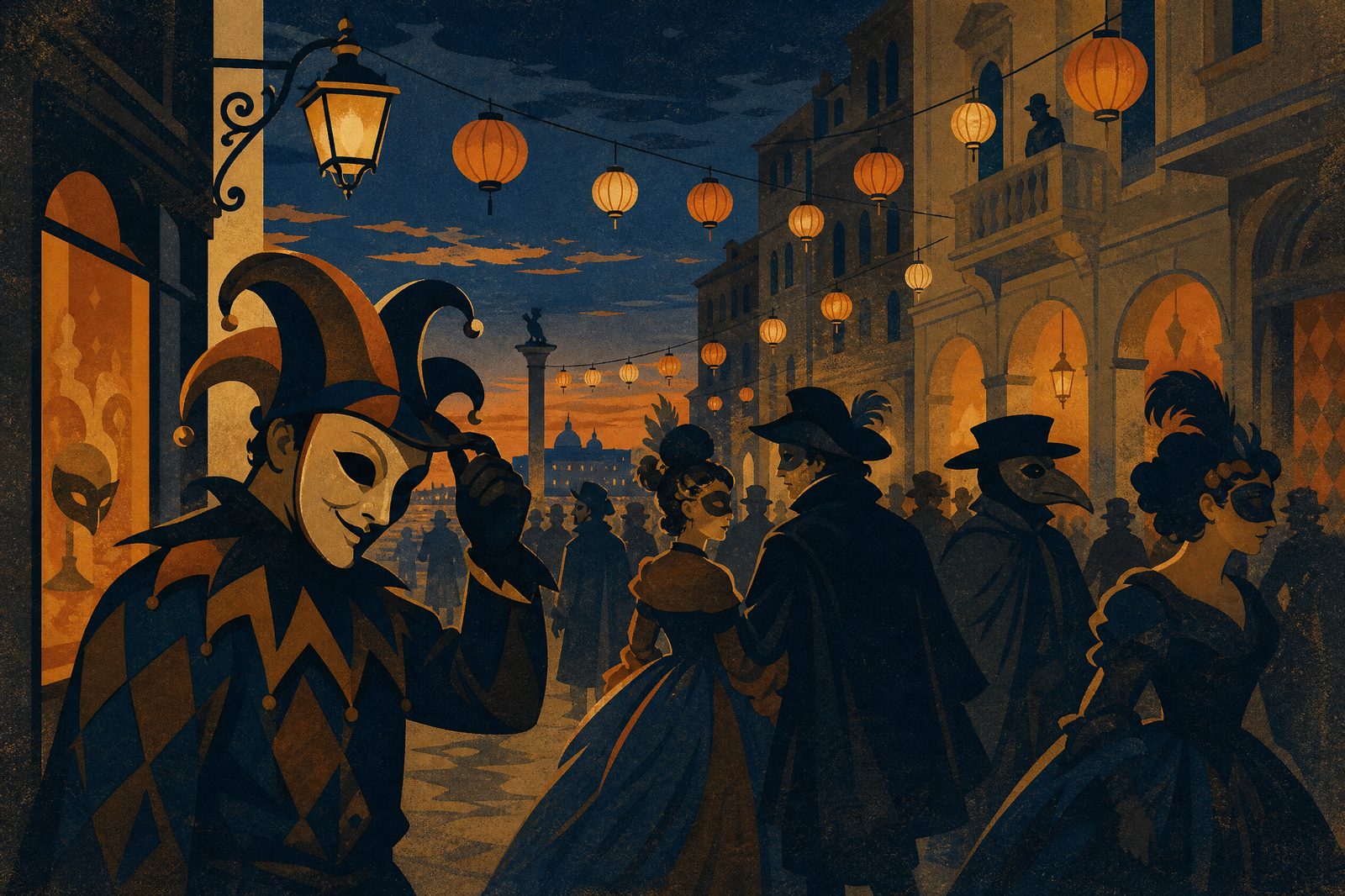
Masquerade Mile: masked figures strolling under lanterns in an evening street

Leg Four — Masquerade Mile

Genre: Hidden object Journey length: 7–9 hours Bearing: 300° of 360°

Masquerade Mile takes place along a single evening street — one mile of lanterns, balconies, and masked promenaders — and asks you to find the jester hiding in plain sight, night after night. It is a hidden-object game, but one built with the patience of a stage designer: every scene is a genuine crowd, not a collage, and the jester's disguises grow more inventive with each chapter.

The trick that keeps the mile fresh is time. Scenes replay at different hours: the crowd that gathered outside the chocolatier at dusk has moved to the bridge by midnight, and the clue you noticed earlier means something new. Our crew played the entire game two-to-a-screen, arguing happily, which we consider the highest compliment a seek-and-find can earn.

The smudges on the postcard: chapters seven and eight visibly recycle props and silhouettes, and the hint system is either too shy or too generous with little between. A patch has reportedly improved the latter since our journey.

Would we return? For the first six chapters, absolutely. Bring a friend and argue about where the jester is. That is the game at its best.
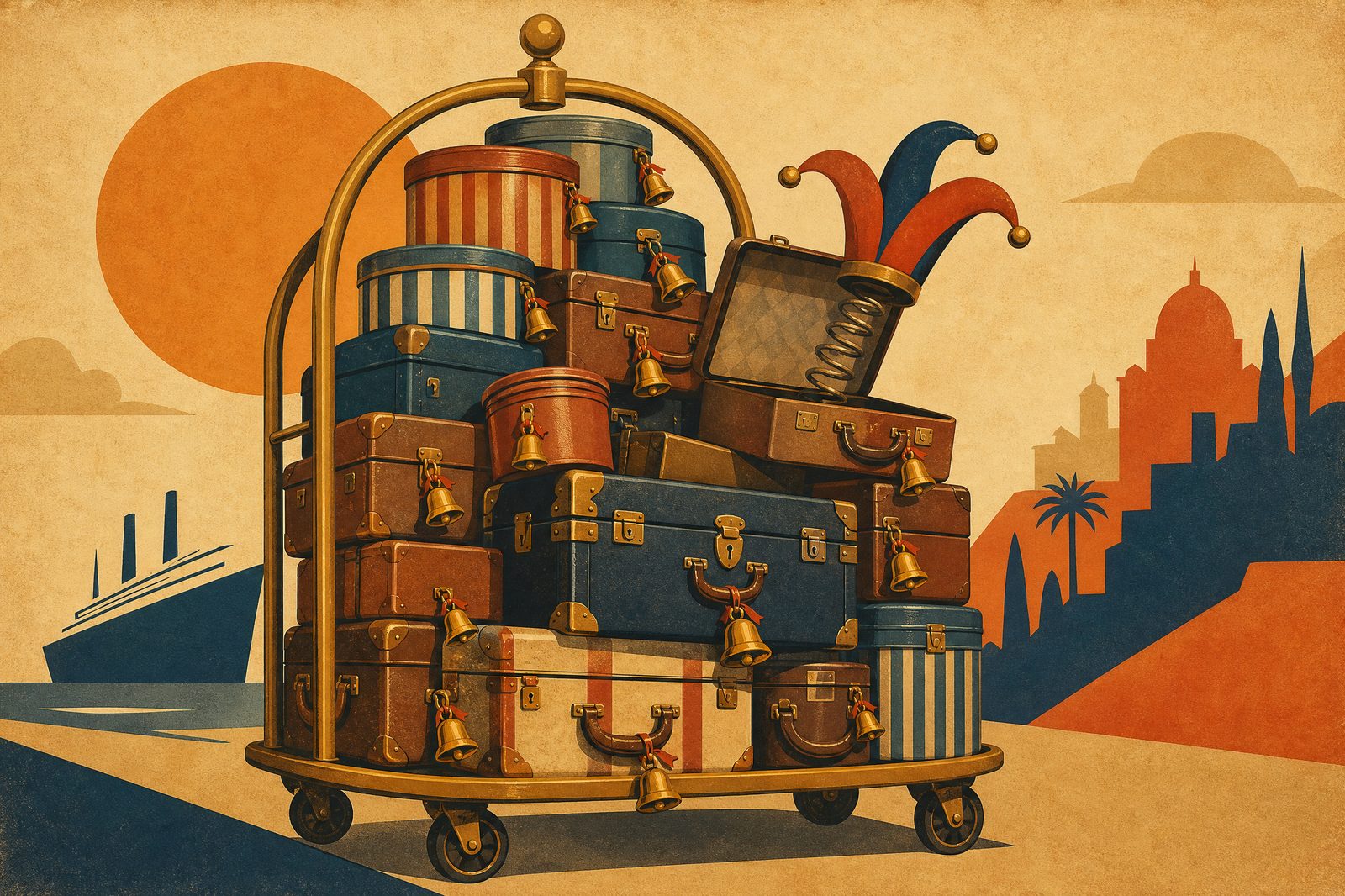
Baggage of Bells: a golden luggage trolley stacked with belled suitcases

Leg Five — Baggage of Bells

Genre: Packing puzzle Journey length: 4–5 hours Bearing: 280° of 360°

The premise of Baggage of Bells fits on a luggage tag: pack an impossible pile of cases onto a porter's trolley before the ferry horn sounds, while a jack-in-the-box jester keeps springing lids open and rearranging your work. It is a spatial puzzle with the heart of a slapstick routine, and for its first three hours it is gloriously funny.

The packing itself is satisfyingly tactile — cases thunk, hatboxes wobble, and the physics are forgiving enough to feel fair. Each of the five ports introduces a new nuisance: seagulls with opinions, a tide that tilts the trolley, and finally the jester himself as a playable saboteur in a clever role-reversal finale.

Our reservations are about length and repetition. Four to five hours is a short voyage, and the middle port reuses its best gag three times. A planned free chapter may add new destinations; our bearing reflects the journey as it stands today.

Would we return? As a weekend jaunt, yes. As a grand tour, not quite yet — but we are watching the harbour for that new chapter.

Know a joker-themed game that belongs on next season's route?

Suggest a stop